Sunday, January 29, 2012

Hypericum (I) perforatum

 Rusty red Hypericum perforatum plants in late winter.


  Hypericum perforatum is an herbaceous perennial plant with bright yellow flowers. Its common name - "St. John's wort" - comes from its traditional flowering and harvesting on St John's day, 24 June. The species name perforatum refers to the presence of small oil glands in the leaves that look like miniscule holes, which can only be seen when held against the light.
Native to Europe, Hypericum perforatum is the most common member of the Hypericum genus in Greece along with Hypericum triquetrifolium, and has established itself in waste grounds, roadsides, cultivated fields and in urban areas. Always thriving in direct sunlight, it is often found growing on recently disturbed sites from impacts like fire and construction. During wintertime one can easily distinguish the erect dry plants due to their rusty red color. The plant is widely known as an herbal treatment for depression, and a topical remedy for wounds, burns, and muscle pain.

_ _ _ _ _ _ _ _ _ _ _ _ _ _ _ _ _ _ _ _ _ _ _ _ _ _

** Hypericum triquetrifolium is commonly misidentified as Hypericum perforatum. This is understood well if one takes into account their stem color and their use: both species have this very distinctive rusty-red color from mid summer through winter (despite H. triquetrifolium's  more horizontal and shrubby, dry stem structure), and both, as it seems, share the same medicinal properties, and for this reason are harvested without distinction.
____________________________________________________________________


  Το Hypericum perforatum (κοινώς υπερικό, βαλσαμόχορτο ή σπαθόχορτο) είναι μια πολυετής πόα που παράγει φωτεινά κίτρινα λουλούδια. Η πολύ κοινή αγγλική του ονομασία (St. John's wort - βότανο του Αγίου Ιωάννη), προέρχεται από την παραδοσιακή συλλογή των λουλουδιών την ημέρα της γιορτής του Αγίου Ιωάννη, στις 24 Ιουνίου. Το όνομα του είδους - perforatum= διάτρητο - αναφέρεται στην παρουσία μικροσκοπικών ελαιοπαραγωγών αδένων στα φύλλα, οι οποίοι κόντρα στο φως μοιάζουν με απειροελάχιστες τρύπες.
Είδος ενδημικό της Ευρώπης, το Υπερικό είναι το πιο κοινό μέλος του γένους Hypericum στην Ελλάδα, μαζί πάντα με το Hypericum triquetrifolium**, και μπορεί να το συναντήσει κανείς εύκολα τόσο σε χέρσα εδάφη όσο και σε καλλιεργημένα, στις άκρες των δρόμων, ακόμη και μέσα στην πόλη. Συχνά παρατηρείται να φυτρώνει σε πρόσφατα σκαμμένο ή καμένο έδαφος, και πάντα εκτεθειμένο στον ήλιο. Εκείνο που είναι ιδιαίτερο χαρακτηριστικό για την αναγνώριση του φυτού το χειμώνα, είναι ο αποξηραμένος σκελετός του που παραμένει όρθιος στο χρώμα της σκουριάς. Το Υπερικό είναι ευρέως γνωστό τόσο για την αντικαταθλιπτική του δράση, όσο και για την επούλωση πληγών και εγκαυμάτων, και την ανακούφιση μυικών πόνων.

_ _ _ _ _ _ _ _ _ _ _ _ _ _ _ _ _ _ _ _ _ _ _ _ _ _

** Το είδος Hypericum triquetrifolium (κοινώς "αγούδουρας") συγχέεται πολύ συχνά με το Hypericum perforatum. Κάτι τέτοιο δε μοιάζει να είναι τυχαίο, αφού και τα δύο είδη διατηρούν έναν σκούρο πορφυρό σκελετό από τα μέσα καλοκαιριού μέχρι το χειμώνα (το H. triquetrifolium έχει πιο οριζόντιο, θυσσανωτό σκελετό), ενώ πάλι απ΄ ότι φαίνεται διαθέτουν τις ίδιες θεραπευτικές ιδιότητες, γι αυτό και κατά τη συλλογή των λουλουδιών δε γίνεται διάκριση.

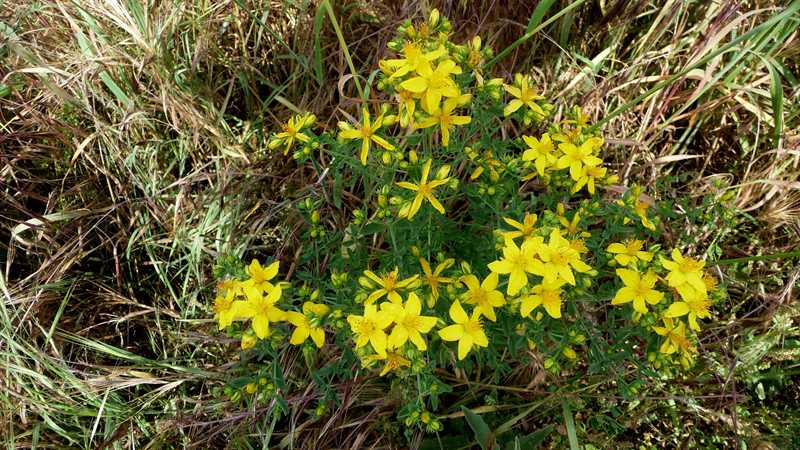
Hypericum perforatum new shoots.
 These shoots can either belong to Hypericum perforatum, or more probably to
Hypericum perfoliatum.

Bright red St. John's Wort Oil /Balsam, 
is produced by infusing Hypericum perforatum, Hypericum triquetrifolium, or Hypericum perfoliatum flowers in olive oil, and in full sun.

Saturday, January 28, 2012

All is One

A violet angel manifesting in the shadow of a balsam oil bottle.

It is wise to listen,
not to me but to the Word,
and to confess that all things are one.
                                                             Heraclitus, 50

See the world as your self - Have faith in the way things are.
Love the world as your self; then you can care for all things.
            
                                                             Lao Tzu, Tao Te Ching, ch. 13
____________________________________________________________

Όχι εμένα αλλά το λόγο να ακούσετε
και να ομολογήσετε ότι σοφή είναι η ρήση:
όλα είναι ένα.
                                                              Ηράκλειτος, απ. 50

Παραδώσου ταπεινά. Τότε θα νοιάζεσαι για όλα.
Αγάπα τον κόσμο σαν τον ίδιο σου τον εαυτό. Τότε θα μπορείς αληθινά να νοιάζεσαι για όλα.
                                                                       
                                                               Λάο Τσε, Τάο Τε Κίνγκ, 13

Friday, January 27, 2012

Asking is an Open Door

Day One - Firstday, acrylic paint and pencil on cardboard, 15x21cm.
  
 (In this visionary picture, Spring is paralleled to Dawn as the eternal First Day).

            I saw Eos, goddess of dawn,
            entering in all her glory 

            > No one would go first and make the start;
                     so she came forth.
              For this they call her
                     Day One, the Firstday <


            With these few sighs
            many mornings will be born,
            many new beginnings. 
            There will be not just one
            but many Springs,
                    one after the other
            ______________________

(Σ΄ αυτή την οραματική εικόνα, η Άνοιξη παρομοιάζεται με την Αυγή, την αιώνια Πρώτη Μέρα).

            Είδα την Ηώ, την Αυγή,
            να μπαίνει μ΄ όλη της τη δόξα

            > Επειδή κανείς δεν ήταν, να πάει πρώτος
                    και να κάνει την αρχή, πήγε εκείνη.
              Γι αυτό και τ΄ όνομά της είναι
                    Πρώτη Μέρα <


            Μ΄ αυτούς τους λίγους αναστεναγμούς
            θα γεννηθούν πολλά πρωινά,
            πολλά ξεκινήματα.
            Θα ΄ρθούν πολλές Άνοιξες,
                   η μια μετά την άλλη


Thursday, January 26, 2012

Nigella damascena


 Nigella damascena is probably the most famous member of the Nigella genus. Its flowers are again pale blue or white and can easily be confused with the flowers of Nigella arvensis of the previous post. What is very distinctive here is the beautiful, inflated seed capsules. Many richly colored varieties of this annual plant are cultivated in gardens.
  The name Nigella means "black", and is due to the black seeds that the 14 species in this genus produce. The black seeds that are known as Kalonji, or black onion seeds, are produced by another native to South Asia plant, Nigella sativa, that looks very similar to Nigella arvensis. This spice that is used to flavor breads and vegetable dishes in Asia, and is also known as "black cumin", is a very important natural remedy with an immunomodulatory action.
____________________________________________________________________

  Το πιο γνωστό ίσως από τα 14 μέλη του γένους Nigella είναι η Nigella damascena. Τα άνθη της μπορεί εύκολα να τα συγχέει κανείς με τα ωχρά μπλε ή λευκά άνθη της Nigella arvensis που είδαμε στην προηγούμενη ανάρτηση. Εκείνο όμως που είναι ιδιαίτερα χαρακτηριστικό είναι οι κάψουλες των σπόρων οι οποίες μοιάζουν με ραβδωτές φούσκες. Πολλές ποικιλίες αυτού του φυτού, με έντονα χρώματα, καλλιεργούνται στους κήπους.
  Το όνομα Nigella σημαίνει "μαύρη" και προέρχεται από τους μαύρους σπόρους που παράγονται από την ομάδα αυτή των φυτών. Οι μαύροι σπόροι που αποκαλούμε "μαυροκούκι" προέρχονται από ένα είδος ενδημικό της νότιας ασίας, την Nigella sativa, η οποία μοιάζει περισσότερο με την Nigella arvensis. Το μαυροκούκι είναι ένα εξαιρετικό μπαχαρικό, ενώ ταυτόχρονα θεωρείται ένα από τα πολυτιμότερα βότανα, ρυθμιστικό του ανοσοποιητικού συστήματος.


Wednesday, January 25, 2012

Nigella arvensis

Nigelle arvensis star seed pods.
  This is not a flower that you will find yourself admiring in the wild, although a closer look would reveal the delicate and complex flowers of Nigella arvensis - the very pale blue-white blossoms easily go unnoticed. What you can admire though, is the dried plant's beautiful seed pods that remain in winter.
____________________________________________________________________

  Τα ωχρά μπλε λουλούδια της Nigella arvensis δεν προκαλούν εύκολα τον θαυμασμό έξω στη φύση. Μια πιο προσεκτική όμως ματιά μπορεί να μας αποκαλύψει τον περίτεχνο κόσμο τους. Εύκολοι για αναγνώριση το χειμώνα είναι οι αμονικοί καρποί του, που μοιάζουν με αστέρια.

You have to try hard to see the faint blue tint of the Nigella arvensis flowers. For some nice close-ups look here.

Tuesday, January 24, 2012

Hanging beauty

The elegant, 2m high, stem structure of Silene gigantea hanging on a wall.

In tomorrow's schools, children will be taught what we don't know.

               In the pursuit of learning, every day something is added.
               In the pursuit of Tao, every day something is dropped
.

                                             Lao Tzu, Tao Te Ching, 48
________________________________________________________________

Ένα επαναστατικό σχολείο σήμερα μπορεί να διδάξει μονάχα αυτά που δεν ξέρουμε.

                Στης μάθησης το δρόμο, αποχτιέται κάθε μέρα κι από κάτι.
                Στο δρόμο του ταό, κάθε μέρα αποβάλλεται και κάτι
.
                                                
                                              Λάο Τσε, Τάο Τε Κίνγκ, 48

Monday, January 23, 2012

Silene gigantea

Dry plants of Silene gigantea in the forest of Seich-Sou
  Members of the Silene genus are usually small plants with striking pink or white flowers. But despite Silene gigantea's height (she can grow up to 2m high), the plant can easily go unnoticed because of its small discreet, green flowers. I think another fit name would be Silene glutinosa or viscosa due to the plant's distinctive sticky inflorescence that looks like an insect trap...
  Flowers in this genus react to light by opening during the day, and closing in the evening - do you remember the pink flowers you picked, that, to your disappointment, closed when you put them in the vase? In the case of Silene gigantea, the petals turn inwards during the hot hours of the day, making the flowers look even fainter.
__________________________________________________________________________

  Το γένος των Σιληνών περιλαμβάνει πολλά είδη (θα συναντήσουμε αρκετά αργότερα) μικρών συνήθως φυτών, με έντονα ροζ ή λευκά άνθη. Η Σιληνή όμως η Γιγάντεια (Silene gigantea) παρ΄ ότι μπορεί να φτάσει και τα δύο μέτρα ύψος, έχει μικρά άτονα, πράσινα λουλούδια και δύσκολα τη διακρίνει κανείς ανάμεσα στα άλλα φυτά. Ακόμη περισσότερο το όνομα που θα της ταίριαζε είναι Σιληνή η Κολλώδης γιατί οι ανθοφόροι βλαστοί της κολλάνε χαρακτηριστικά πολύ, λες και είναι παγίδες για έντομα...
  Στις σιληνές παρατηρείται το φαινόμενο της φωτοναστίας:
Αλλαγές στην ένταση του φωτός προκαλούν άνοιγμα των ανθέων την ημέρα και κλείσιμο προς το σούρουπο - θυμάστε καθόλου τα ροζ λουλούδια που μαζέψατε να κλείνουν όταν τα βάλατε στο βάζο; Στο είδος Silene gigantea, τα πέταλα συστρέφονται προς τα μέσα στις ζεστές ώρες της ημέρας, γεγονός που κάνει τα λουλούδια του ακόμη πιο δυσδιάκριτα.

Silene gigantea winter rosettes.


Sunday, January 22, 2012

Hyoscyamus albus

Hyoscyamus albus seed pods.
  Hyoscyamus albus is one of the enigmatic, dark members of the Solanaceae family. It is both a toxic and very useful medicinal plant (well known for its sedative and antispasmodic properties - Parkinson's disease). Also called White Henbane, (in Greek "the doctor" or "old man"), Hyoscyamus albus is a very drought tolerant plant, widely distributed in the Mediterranean basin, with a life-span of one to three years. The leaves are hairy and sticky, and the whole plant has a narcotic, fetid smell. The plant thrives in coastal areas, and it prefers dry, uncultivated and sandy ground; it is chiefly found growing on walls and old stone structures, especially in archaeological sites.
_______________________________________________________________________


  Hyoscyamus albus, ή αλλοιώς Γέρος, Γέροντας ή Γιατρός, είναι ένα από τα σκοτεινά μέλη της οικογένειας των Σολανιδών - τοξικό απ΄ τη μια χρήσιμο απ΄ την άλλη φαρμακευτικό φυτό, γνωστό για τις καταπραυντικές και αντισπασμωδικές του ιδιότητες (Parkinson's). Πρόκειται για ένα είδος διαδεδομένο στη Μεσόγειο, με μεγάλη ανθεκτικότητα σε συνθήκες ξηρασίας. Η διάρκεια ζωής του είναι από ένα μέχρι τρία χρόνια. Τα φύλλα του είναι υγρά και κολλώδη, γεμάτα λεπτά τριχίδια, και ολόκληρο το φυτό αναδίδει μια απωθητική, ναρκωτική μυρωδιά. Το φυτό αυτό δείχνει ιδιαίτερη προτίμηση σε παραθαλάσσια, αμμώδη και χέρσα εδάφη, ενώ μπορεί εύκολα να το συναντήσει κανείς φυτρωμένο σε πέτρινους τοίχους και ερείπια, ιδιαίτερα σε αρχαιολογικούς χώρους.


Hyoscyamus albus dry plant.

 The yellow flowers of Hyoscyamus albus.


Thursday, January 19, 2012

The real fear

The real fear
   is fear of love.

- The only purpose of beliefs is to be an obstacle to that awareness -

                                                               Byron Katie, Losing the Moon
_____________________________________________________________________

Ο πραγματικός φόβος
   είναι ο φόβος της αγάπης.

- Ο μοναδικός σκοπός των πεποιθήσεων είναι να συσκοτίσουν αυτή την επίγνωση -

                                                               Byron Katie, Losing the Moon
A thistle dreaming of love. Watercolor 15x21cm.
«I had to sit with every concept as though it was the beloved; as it were God;
- because it is! It rules your life! These thoughts rule your life!
And I had to sit with them as though they were my children. Because they were everywhere; and each child - each thought - screaming to be heard.
And, as a person sits in meditation, or just tries to stop their mind, stop their thoughts...
- although it appears that you can do that for a while, but they pop back up! ...
...
It was clear to me to meet these thoughts as I would my children! To meet them with understanding and unconditional love».

                                                        Byron Katie, Your Inner Awakening

_____________________________________________________________________

«Έπρεπε να καθίσω με την κάθε ιδέα σαν να ήταν ο αγαπημένος. Σαν ήταν ο Θεός.
- Επειδή είναι! Διοικεί τη ζωή σου! Αυτές οι σκέψεις διοικούν τη ζωή σου!
Και έπρεπε να καθίσω μαζί τους σα να ήταν παιδιά μου. Επειδή ήταν παντού, και κάθε παιδί - κάθε σκέψη - ούρλιαζε για ν' ακουστεί.
Και, όπως κανείς κάθεται σε διαλογισμό, ή απλώς προσπαθεί να σταματήσει το μυαλό του, να σταματήσει τις σκέψεις του...
- παρόλο που μοιάζει πως μπορείς να το καταφέρεις για λίγο, αλλά αυτές ξεπηδάνε πάλι πίσω! ...
...
Μου ήταν ξεκάθαρο πως έπρεπε να συναντήσω αυτές τις σκέψεις όπως θα συναντούσα τα παιδιά μου! Να τις συναντήσω με κατανόηση και χωρίς όρους αγάπη».

                                                        Byron Katie, Your Inner Awakening

Tuesday, January 17, 2012

Urban mushrooms (III)


  Pleurotus ostreatus (common oyster mushroom), is the third edible mushroom one can find growing in the city, fall and winter. Oyster mushroom's shelf-like clusters grow on dead logs and living trees (primarily hardwoods, and sometimes fir trees), with their velvet, off-center caps and with almost absent stipes (stems). Pleurotus ostreatus is accredited medicinal properties, too.
___________________________________________________________________

Μανιτάρια της πόλης (IΙI)

  Το Pleurotus ostreatus, κοινώς Πλευρώτους, είναι το τρίτο στη σειρά εδώδιμο μανιτάρι που μπορεί κανείς να συναντήσει μέσα στην πόλη. Είναι μάλιστα από τα είδη που συνεχίζουν μεσ΄ το χειμώνα. Οι ομάδες του Πλευρώτους εμφανίζονται σε νεκρό ξύλο πλατύφυλλων ή έλατου, με τα χαρακτηριστικά έκκεντρα βελούδινα καπέλα τους, σχεδόν χωρίς πόδι. Το Πλευρώτους παρουσιάζει, κι αυτό, ενδιαφέρουσες θεραπευτικές ιδιότητες.


Urban mushrooms (II)

This mushroom cluster has grown on a decaying tree stump that lies underneath.
  Here's a very interesting species that is mostly a Mediterranean one. Agrocybe cylindracea (also known as Agrocybe aegerita, Poplar mushroom and Velvet pioppino) is a common mushroom that one will find growing in dense clumps on stumps and trunks of deciduous trees, especially poplar (trees of the Populus genus). Agrocybe cylindracea is also a very productive mushroom, usually growing in the same spot on some kind of rotten wood, over and over again. Easy to grow, it bears fruit 4 to 8 times a year - March through November -, and it was cultivated by the ancient Greeks and Romans; the Italians still do (in Italy, they say, it is one of the most common and popular mushrooms). I will agree with those who find it has an excellent taste and texture. It is also considered one of the mushrooms with great medicinal properties.
____________________________________________________________________

Μανιτάρια της πόλης (II)

  Η Agrocybe cylindracea είναι ένα Μεσογειακό κατά κάποιον τρόπο είδος μανιταριού, το οποίο παρουσιάζει ιδιαίτερο ενδιαφέρον. Πρόκειται για ένα πολύ κοινό μανιτάρι εδώ στη Θεσσαλονίκη, το οποίο μεγαλώνει σε μεγάλες ομάδες (κοπαδιαστά), παρασιτικά ή σαπροφυτικά σε βάσεις, πρέμνα και κορμούς λεύκας (δέντρα του γένους Populus) και άλλων πλατύφυλλων. Η Αγροκύβη η κυλινδρική είναι ένα παραγωγικό μανιτάρι που φυτρώνει συνήθως ξανά και ξανά στο ίδιο σημείο. "Καρποφορεί" 4 με 8 φορές το χρόνο, από τον Μάρτιο έως τον Νοέμβριο, και ήταν διαδεδομένη η καλλιέργειά του στους αρχαίους έλληνες και ρωμαίους. Οι ιταλοί ακόμη το καλλιεργούν, και μάλιστα, απ΄ ό,τι λένε, στην Ιταλία είναι ένα από τα πιο κοινά και δημοφιλή μανιτάρια. Θα συμφωνήσω με όσους το βρίσκουν πολύ νόστιμο και με ιδιαίτερη υφή. Περιλαμβάνεται επίσης στις λίστες με τα μανιτάρια με ιδιαίτερες θεραπευτικές ιδιότητες.

Agrocybe cylindracea seems to appear in many slightly different forms and pale brownish hues, but it is easily distinguished by its pleasant smell, its firm flesh and its velvet cap, that is often uneven and crackled.
The ring that is meant to protect the young mushroom's gills is actually not attached to the stem in Agrocybe cylindracea. Here you can see a large specimen with its gills fully covered by the ring membrane.