Wednesday, September 26, 2012

Ranunculus trichophyllus

Ranunculus trichophyllus.


  Ranunculus is a large genus of about 600 species of plants bearing bright yellow, or sometimes white, flowers.The name Ranunculus is derived from the Latin word for frog, "rana", suggesting the occurence of many species near water, like frogs. In Greece one can find over 60 of these plants, at least two of which are submerged aquatic plants, R. aquatillis and R. trichophyllus.

Ranunculus trichophyllus is a herbaceous perennial aquatic plant that occurs both in still and running waters. The stems with pretty thread-like leaves remain just below the surface while the many beautiful miniature white flowers with a yellow center extend out of the water, in May and June.
The closely related species Ranunculus aquatillis is distinguished by an extra leaf type of broader toothed floating leaves that surround the flowers.
__________________________________________________________________


  Το γένος Ranunculus είναι ένα πολυπληθές γένος 600 περίπου ειδών φυτών που παράγουν συνήθως λαμπερά κίτρινα λουλούδια, και κάποιες φορές λευκά. Το όνομα Ranunculus προέρχεται από την λατινική λέξη "rana", που σημαίνει βατράχι, υποννοώντας την συχνή παρουσία πολλών ειδών κοντά στο νερό. Στην Ελλάδα μπορεί κανείς να συνατήσει πάνω από 60 είδη, τουλάχιστον δύο από τα οποία είναι υδρόβια φυτά: R. aquatillis και R. trichophyllus.

Ο Ranunculus trichophyllus είναι ένα πολυετές φυτό το οποίο κάθε άνοιξη σχηματίζει νέους βλαστούς με πράσινα τριχοειδή φύλλα ακριβώς κάτω απ΄ την επιφάνεια του στάσιμου ή του τρεχούμενου νερού, ενώ παράγει πολλά μικρά λευκά λουλούδια με κίτρινη καρδιά, Μάιο με Ιούνιο.
Το πολύ συγγενές είδος Ranunculus aquatillis διακρίνεται εύκολα από τα έξτρα παλαμοειδή φύλλα του που επιπλέουν γύρω από τα άνθη.


Monday, September 24, 2012

Utricularia vulgaris

Utricularia vulgaris.


   Utricularia is a large genus of over 200 species of carnivorous aquatic plants, commonly known as the Bladderworts, that capture small organisms by means of bladder-like traps that are recognized as one of the most sophisticated structures in the plant kingdom. In Greece one can find two species, U. minor and U. vulgaris.

Utricularia vulgaris (Common Bladderwort), is a free-floating aquatic species of Europe and Asia, that does not put down roots. The miniscule bubble traps are arranged on the leaves, and the beautiful tiny yellow flowers are born on stalks that rise out of the water, in late summer. In winter the plants die back and form specialized bud-like shoots called "turions", that remain at the bottom. 
__________________________________________________________________


  Το γένος Utricularia περιλαμβάνει πάνω από 200 είδη υδρόβειων σαρκοφάγων φυτών, τα οποία συλλαμβάνουν μικροοργανισμούς με τις κυστοειδείς τους παγίδες. Ο μηχανισμός αυτός σύλληψης αποτελεί μια από τις τελειότερες κατασκευές στο φυτικό βασίλειο. Στην Ελλάδα απαντώνται δύο είδη, η U. minor και η U. vulgaris.

Η  Utricularia vulgaris είναι ένα υδρόβειο φυτό της Ευρώπης και της Ασίας, που πλέει ελεύεθερα χωρίς να σχηματίζει ρίζες. Οι μικροσκοπικές σαν φυσαλλίδες παγίδες είναι διατεταγμένες πάνω στα τριχοειδή φύλλα, ενώ τα πολύ μικρά όμορφα κατακίτρινα άνθη παράγονται σε ένα ανθοφόρο στέλεχος που προεξέχει από το νερό, στ τέλη του καλοκαιριού. Τον χειμώνα τα φυτά μετασχηματίζονται σε εξειδικευμένα μικρά βολβίδια-βλαστούς, τα οποία παραμένουν στο βυθό.


Sunday, September 23, 2012

Trapa natans

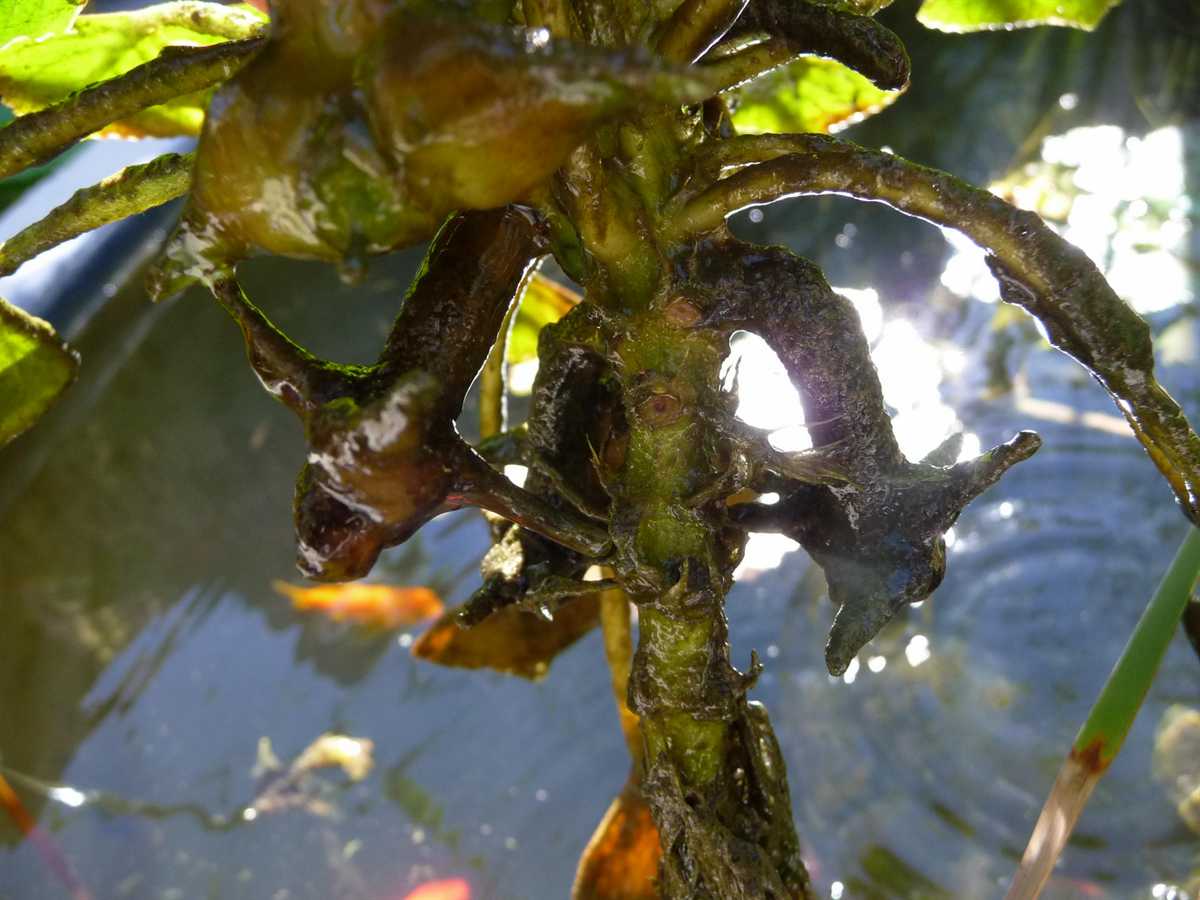
Trapa natans water mandalas.


  Trapa natans, commonly known as Water Chestnut (not be confused with the unrelated Chinese species Eleocharis dulcis), is a beautiful annual aquatic plant, growing in lakes and slow moving waters (up to 5 m. deep) in S. C. Europe, W. Asia and N. Africa. This very sophisticated plant forms a chain of large floating leaf-rosettes on a very long underwater stem, that also bears whorls of finely divided root-like leaves. The edible fruit, for which it is called Water Chestnut and has been cultivated in China and India for ages, is a very unusual and fierce-looking four-horn woody nut, that serves as an anchor in the mud. The very small flowers are white and rather inconspicuous.
__________________________________________________________________


  Η Trapa natans είναι ένα όμορφο ετήσιο υδρόβιο φυτό, το οποίο απαντάται σε λίμνες και αργά κινούμενα νερά (βάθους μέχρι 5 μ.) στην κεντική και νότια Ευρώπη, στην δυτική Ασία και στην βόρειο Αφρική. Αυτό το πολύ μελετημένο φυτό σχηματίζει μια αλυσίδα από μεγάλους ρόδακες φύλλων που επιπλέουν, πάνω σε έναν πολύ μακρύ υποβρύχιο βλαστό, ο οποίος φέρει και δακτυλίδια από τριχοειδή φύλλα που μοιάζουν με ριζίδια. Ο καρπός, ο οποίος τρώγεται, και για τον οποίο καλλιεργείται εδώ και χιλιάδες χρόνια στην Κίνα και την Ινδία, είναι ιδιαιτέρως αυνήθιστος και δριμύς στην όψη, και λειτουργεί σαν άγκυρα μέσα στην λάσπη. Τα πολύ μικρά άνθη είναι λευκά και σχεδόν αφανή.